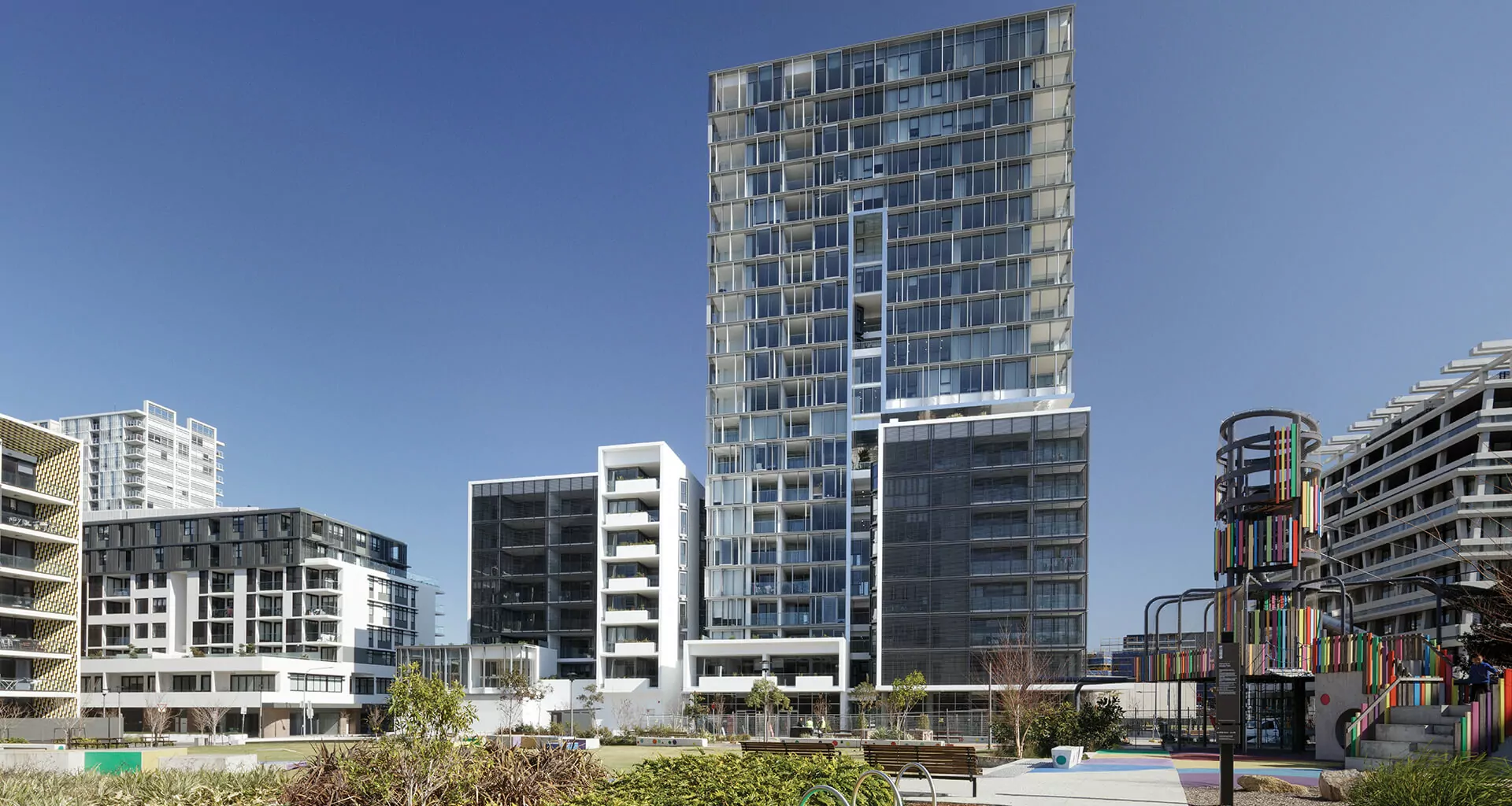
As the lead structural engineering consultants for Emblem at 52 O’dea Avenue, Waterloo (developed by JQZ), JSBC Consulting played a critical role in bringing one of the Green Square precinct’s most dynamic residential developments to life.
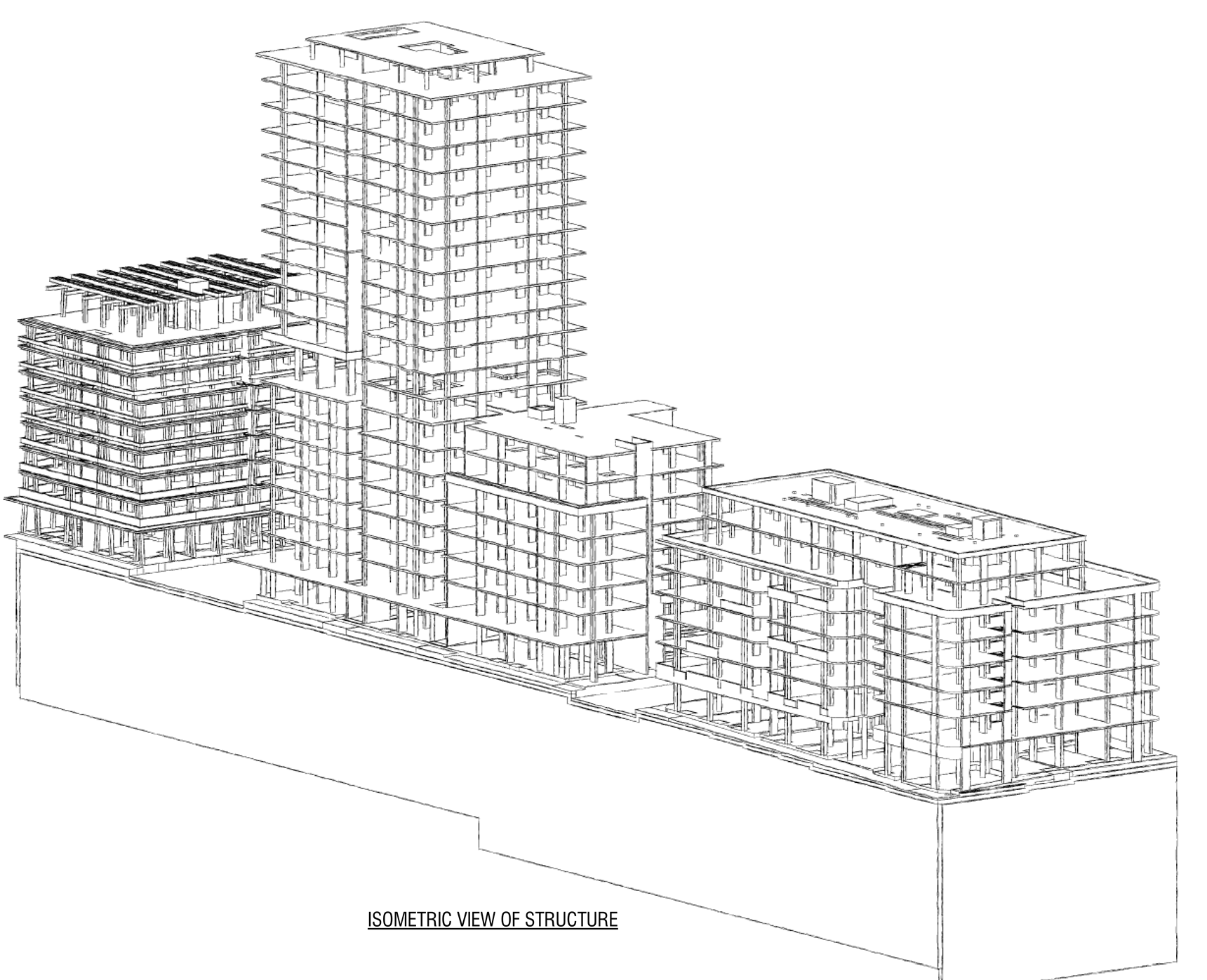
This multi-award-winning project—recognized with a 2019 Award of Excellence for Best Tall Building — comprises 345 apartments spread across three distinct, highly customized structures (Buildings A, B, and C). These structures are unified by a massive common podium and a deep three-level subterranean basement.
JSBC provided unbroken structural delivery, executing the post-tensioning (PT) design, structural concept, detailed engineering, and site supervision from groundbreaking to final handover.
Here is how we engineered the complex, site-specific architectural features of Emblem Waterloo.
1. Building A: The 21-Storey Tower & The Mid-Air Sky Garden
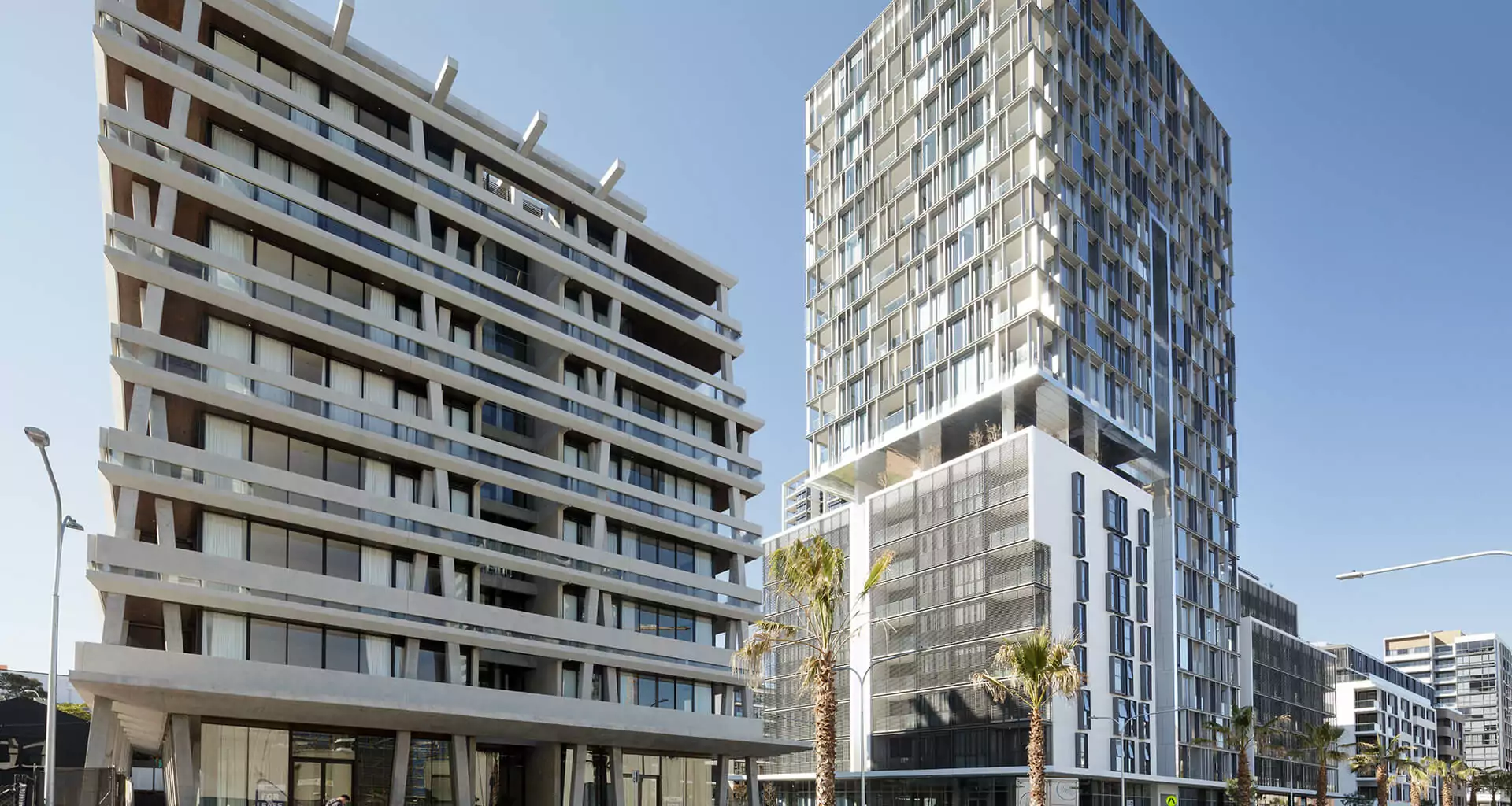
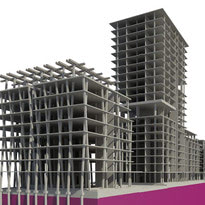
The precinct’s centerpiece is a soaring 21-storey residential tower designed to capture panoramic views of the Sydney CBD and Botany Bay. The primary engineering challenge of this tower was its architectural “cutout”—a spectacular double-height sky garden located at Level 8.
Interrupting the Vertical Load Path:
Creating a two-storey void precisely one-third of the way up a high-rise tower fundamentally disrupts how gravity and wind loads travel down the building’s columns. JSBC engineered highly localized transfer beams to safely bridge this massive gap, capturing the immense weight of the 13 residential storeys above the garden and redistributing the loads seamlessly back into the lower structural grid.
Post-Tensioning Efficiency:
By integrating advanced post-tensioning design into the floor plates, we achieved thinner concrete slabs. This not only maximized floor-to-ceiling heights for the developer but also significantly reduced the overall dead weight bearing down on the lower levels.
2. Building C: The “Chopstick” Columns & Rooftop Pergola
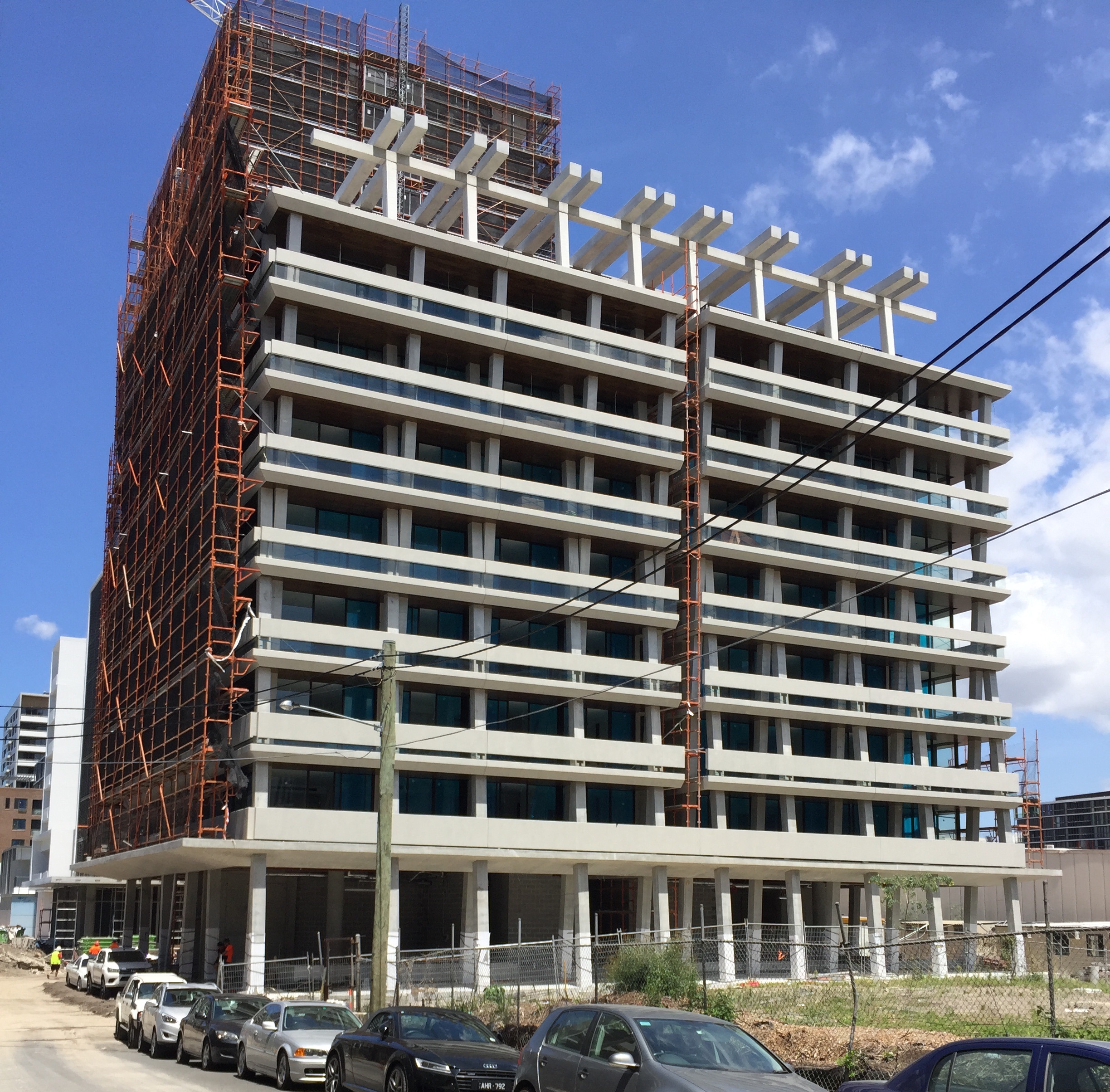
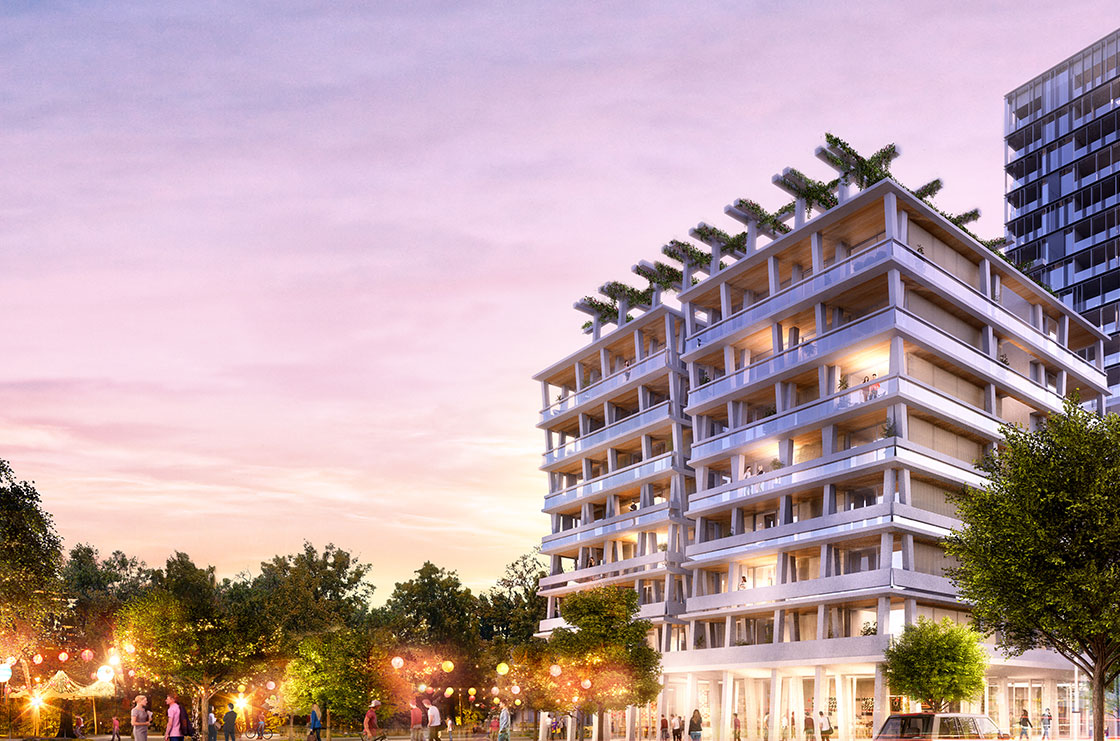
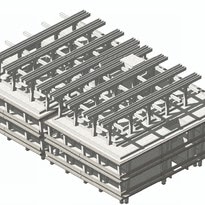
Building C is an 8-storey structure defined by its striking architectural geometry, most notably its angled ground-level supports and exposed rooftop detailing.
Engineering the “Chopsticks”:
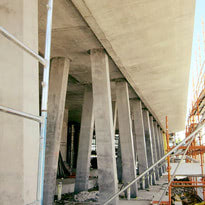
The base of Building C is supported by dramatic, angled “chopstick” columns. When columns are inclined, they generate lateral thrust forces (trying to push outwards) rather than just vertical gravity loads. JSBC designed heavily reinforced tie-back connections within the podium slabs to resist these horizontal forces, ensuring the building remains perfectly stable atop its raking supports.
The Concrete Pergola:
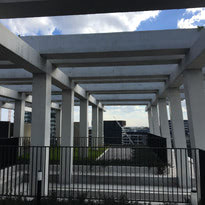
Crowning Building C is a unique, heavy-duty concrete rooftop pergola. Designing this feature required highly detailed off-form concrete engineering, ensuring the heavy structure was safely anchored against high wind uplift forces without compromising the building’s waterproofing membrane.
3. Building B: Supporting the Curved Brick Facade
Building B (8 storeys) introduces a completely different material language to the site with a beautiful, unique curved brick facade.
Deflection Control:
Masonry is incredibly sensitive to movement; if the supporting concrete floors sag over time, the brickwork will crack. JSBC engineered the slab edges on Building B with extremely tight deflection limits, designing continuous steel shelf angles cast directly into the concrete to support the curved brickwork safely across the entire 8-storey facade.
4. The Subterranean Challenge: 3 Basements in Waterloo
Waterloo is notorious for its high water table and challenging geotechnical conditions. Excavating and securing a 3-level basement required expert intervention.
Deep Excavation:
JSBC designed a robust shoring and retention system capable of managing intense lateral soil and hydrostatic (water) pressures. The foundation system was engineered to act as a fully watertight structure, securing the massive common podium above and anchoring all three diverse buildings safely into the ground.
Our team has extensive Tier 1 background experience